
- De Bali4D3N Ijen-Bromo-Sukamade IDR 1.800.000/pax
- De BanyuwangiIjen Blue Fire Midnight Tour 225 000 IDR/personne
- À partir de FloresForfait excursion en bateau de luxe de 3 jours et 2 nuits à Komodo : 2 700 000 IDR/personne
- De MalangBromo Ijen Tumpak Sewu Tour IDR 1.200.000/personne
- De Surabaya4D3N Bromo Ijen Sukamade Tour IDR 1.700.000/pax
- De Bali3D2N Ijen-Bromo IDR 1.400.000/pax
- De BanyuwangiExcursion de 2 jours et 1 nuit dans deux volcans : 900 000 IDR par personne
- À partir de FloresCroisière de 3 jours et 2 nuits à Komodo à petit prix : 2 100 000 IDR/personne
- De Surabaya4D3N Ijen Bromo Tumpak Sewu IDR 1.400.000/pax
- De Bali4D3N Ijen-Bromo-Tumpak Sewu IDR 1.800.000/pax
- De Banyuwangi3D2N Tumpak Sewu Visite du Bromo Ijen 1 400 000 IDR/pax
- De BanyuwangiVisite partagée 3D2N Banyuwangi IDR 1.700.000/pax
- De BanyuwangiVoyage ouvert Parc national de Baluran IDR 300.000/pax
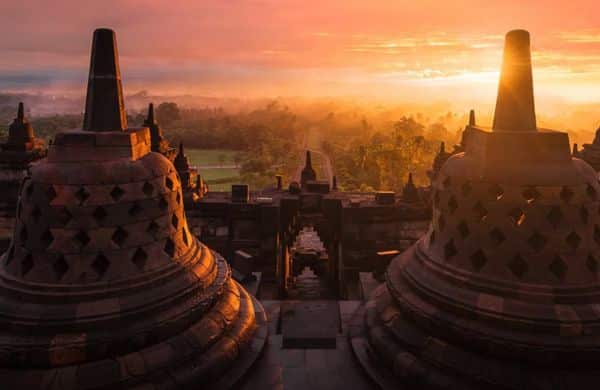
Borobudur vs Prambanan : à la découverte des temples les plus emblématiques de Java
Borobudur vs Prambanan – Nestled in the cultural heart of Central Java near Yogyakarta, two UNESCO World Heritage Sites stand as timeless symbols: Borobudur et Prambanan. These temples not only reflect Indonesia’s diverse religious history but also showcase the brilliance of ancient Javanese architecture.
Travelers often ask: Which temple should I visit first? Borobudur or Prambanan? The truth is, each offers its own charm. This guide will help you explore the history, design, cultural importance, and travel tips for both—making your choice much easier, or better yet, inspiring you to visit both.
📜 The Historical Background
Borobudur: The Buddhist Wonder 🌄
- Built in the 9th century during the Syailendra Dynasty.
- Recognized as the largest Buddhist monument in the world.
- Abandoned in the 14th century when Javanese kings shifted to eastern Java.
- Rediscovered in the 19th century by the British during colonial rule, later restored by UNESCO in the 1970s.
Prambanan: The Hindu Masterpiece 🕉️
- Constructed in the 9th century during the rule of Rakai Pikatan of the Mataram Kingdom.
- Dedicated to the Hindu Trimurti gods: Shiva, Vishnu, and Brahma.
- Abandoned after the shift of the kingdom to East Java and damaged by earthquakes.
- Restored in stages and now part of a major archaeological park.
🏛️ Architectural Splendor
Architectural Style of Borobudur
- A massive stone mandala, with nine stacked platforms.
- Over 2,600 relief panels carved with stories from Buddhist scriptures.
- 504 Buddha statues with various hand gestures (mudras).
- The central stupa rising 35 meters high symbolizes enlightenment.
Architectural Style of Prambanan
- Sharp and towering architecture inspired by Indian temples.
- Features 240 temples, though most are now in ruins except the central shrines.
- The main temple dedicated to Shiva measures 47 meters tall.
- Intricate reliefs describe the epic story of Ramayana.
Circuit terrestre de Java, de Yogyakarta à Bali – Aventure de 10 jours
✨ Religious Symbolism & Cultural Meaning
| Feature | Borobudur Temple 🌄 | Prambanan Temple 🕉️ |
|---|---|---|
| Religion | Buddhism | Hinduism |
| Central Symbol | The path to enlightenment | The Trimurti: Shiva, Vishnu, Brahma |
| Layout | Mandala-like, circular terraces | Towering shrines in concentric squares |
| Reliefs | Depict Jataka tales | Retell Ramayana & Krishna stories |
Together, these temples represent the coexistence of Buddhist and Hindu culture in Java during the 9th century.
📸 Visitor Experience: Borobudur vs. Prambanan
Borobudur 🛕
- Famous for sunrise tours where misty hills surround the temple as the sun rises.
- Best for those who love history, photography, and silent contemplation.
- Climb through levels symbolizing the journey from desire to enlightenment.
Prambanan 🛕
- Ideal at sunset when the glowing temples contrast against the orange sky.
- Best for culture lovers and architectural explorers.
- Often combined with an evening Ramayana Ballet performed in an open-air theatre with the temple backdrop.
🕒 Best Time to Visit
- Borobudur: Sunrise (5 AM) provides breathtaking views and tranquility before crowds.
- Prambanan: Sunset (5–6 PM) is perfect for golden hour lighting & cultural shows at night.
- Dry season (Apr–Oct) provides clearer skies.
🚗 How to Reach the Temples
- Depuis Yogyakarta City Center:
- Borobudur: ~1.5 hours by car
- Prambanan: ~45 minutes by car
- Public transportation available but tours or private cars give flexibility.
- Many travelers combine the two temples in one full day tour.
🎭 Cultural Performances
- Borobudur: Hosts annual Waisak Festival (Vesak Day), drawing monks and pilgrims worldwide. Lanterns released into the night sky create unforgettable spectacles. 🎇
- Prambanan: Home to the Ramayana Ballet, a magical blend of dance, drama, and gamelan music depicting an epic love story. 💃🔥
🏨 Où séjourner
- Near Borobudur: Eco-lodges, boutique resorts, homestays with rice field views.
- Near Prambanan: Limited stays — better to base in Yogyakarta city.
- In Yogyakarta: Wide hotel choices, from budget hostels to luxury heritage hotels.
🍲 Culinary Delights Nearby
- Borobudur area: Fresh market snacks, village homestay meals.
- Yogyakarta: Gudeg (jackfruit curry), Sate Klathak, and Bakpia pastries.
- Prambanan area: Street foods, noodles, and local Javanese warungs.
🌍 Other Attractions Around Yogyakarta
- Mount Merapi Jeep Tour 🌋
- Malioboro Street Shopping 🛍️
- Dieng Plateau Highlands 🌿
- Kalibiru National Park 🌲 for panoramic viewpoints
When it comes to Borobudur contre Prambanan, the answer is simple: see both! Borobudur inspires awe with its spiritual calm and sunrise vistas over Buddha statues, while Prambanan stuns with its towering Hindu shrines, intricate carvings, and cultural performances at twilight.
Together, they are two sides of Java’s spiritual coin — symbols of harmony between Buddhism and Hinduism that shaped Javanese civilization.
So why choose? Visit both and immerse yourself in the iconic temples of Yogyakarta 🛕🌄.
[wptb id=1030]
Vous pourriez être intéressé par la lecture de l'article suivant :

Principales activités autour du cratère Kawah Ijen, Banyuwangi
Que faire autour du cratère de Kawah Ijen, à Banyuwangi ? – Le paradis caché de Java Est. Introduction – Le lever de soleil sur Java ☀️ Banyuwangi, qui signifie littéralement “ eau parfumée ”, est une terre où les premiers rayons du soleil caressent Java. Chaque lever de soleil projette des rayons dorés sur ses volcans, ses jungles et ses côtes, justifiant ainsi son nom. En savoir plus

Circuit combiné à Java Est : Mont Bromo et Kawah Ijen en un seul voyage
Circuit combiné Java Est : Mont Bromo et Kawah Ijen en un seul voyage. Java Est abrite deux des merveilles naturelles les plus emblématiques d'Indonésie : le Mont Bromo et ses levers de soleil dorés, et le Kawah Ijen et ses mystérieuses flammes bleues. Pour les aventuriers, combiner ces deux sites en un seul voyage – souvent appelé circuit combiné Java Est – est une excellente option. En savoir plus

Guide de voyage de Malang : Culture, nature et spécialités culinaires
Guide de voyage de Malang : Culture, nature et gastronomie – Nichée entre les montagnes de Java oriental, Malang est une ville où culture, nature et délices culinaires se conjuguent harmonieusement. Réputée pour son charme historique, ses attractions familiales et son climat frais d’altitude, Malang accueille aussi bien les routards que les voyageurs en quête de luxe. En savoir plus

À la découverte du château d'eau de Taman Sari : le joyau caché de Yogyakarta
Exploring Taman Sari Water Castle: The Hidden Gem of Yogyakarta Nestled just a short walk from Keraton Yogyakarta, the Taman Sari Water Castle is one of the city’s most fascinating cultural landmarks. With royal bathing pools, hidden tunnels, and ancient ruins, this site offers a glimpse into the luxurious world of Javanese royalty during th... En savoir plus

Tour épique de Java Bali au départ de Jakarta...
*Commencer $ 1,562.50 / personne

Cheap Bromo Sunrise Midnight Tou...
*Commencer $ 56.25 / personne


Ijen Blue Fire Midnight Tour : Avec...
*Commencer $ 15.63 / personne


Ijen Bromo Sukamade Sewu Waterfa...
*Commencer $ 143.75 / personne

Aventure Double Volcan : Ijen C...
*Commencer $ 71.88 / personne


IsunOsing Tour est une marque déposée de CV. EKATAMA LOKESJAYA | AHU-0027248-AH.01.14 – 2022
CONTACTEZ BANYUWANGI
Circuit IsunOsing Ijen Bromo : Jl. Trunojoyo No.30, Kebalenan, Kec. Banyuwangi, Kabupaten Banyuwangi, Jawa Timur 68417
WhatsApp : +62-85815842888 (chat uniquement)
E-mail : info@isunosing.co.id
 👉 Carte Google
CONTACT BALI
Hébergement à Tuban Torres :Jl. Kakatua n°7 B, Tuban, Kec. Kuta, Kabupaten Badung, Bali, Indonésie – 80361
WhatsApp : +62-81328498844 (chat uniquement)
E-mail : cs_bali@isunosing.co.id
👉 Carte Google
Chat en direct
En ligne du lundi au dimanche (09h00 – 23h00) UTC+7
ACCEPTER LE PAIEMENT
 BCA VA
 Mandiri VA
 BNI VA
 BRIVA
 DANA
 ShopeePay
 Indomaret
 Alfamidi
 QRIS
 DuitNow / TnG
 Alipay
 NETS SG
 PromptPay
 JPQR / Japan
 Kakao Pay
 Wise
 Revolut
 Remitly
 WorldRemit
 Instarem
 PayPal
 Visa
 Mastercard
 Maestro
IsunOsing Tour - Inspirez votre voyage d'aventure
ISUNOSING.CO.ID
Contactez-nous
Si vous avez des questions, n'hésitez pas à nous contacter.
-
WeChat
6285815842888 -
WhatsApp
6285815842888 -
E-mail
info@isunosing.co.id
Aucun commentaire pour l'instant